18th December 2025
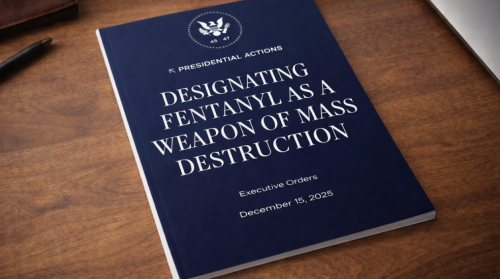
Designating fentanyl as a WMD has nothing to do with drug control - and wont work as a form of drug control even if it did.
In a similar fashion to the recent designation of some drug cartels/organised crime groups as 'terrorist organisations', this latest move is more than just drug war machismo. It's a very deliberate strategy to justify punitive domestic policing and overseas military interventions by triggering access to emergency, anti-terror and wartime powers. It's a way of consolidating executive power.
Designating fentanyl a WMD may not grant specific powers (although WMD's are referenced in certain federal laws) but it does move the issue from health & regulation into the political and institutional purview of war & security. As such it will tend to increase congressional and judicial deference to executive claims (even when false - like the alleged fentanyl boats coming from Venezuela), and lowers the bar for extraordinary measures (like extrajudicial murder in international waters). It also makes opposition politically riskier, with critics fearful of being accused of being “soft on WMDs” etc. This is how power can be consolidated even without congressional approval or formal constitutional reforms.
Unilaterally designating fentanyl a WMD by decree does not actually make it a WMD. Its not a 'weapon' in any meaningful sense. Its a pharmaceutical, and a very useful one too, as an analgesic (in patches) and anaesthesia (IV). It's also used non-medically, whether diverted from medical use or illegally manufactured. Today in the US its illegal version is consensually bought and consumed by people who are seeking it (although in reality much of the street bought fentanyl is a cocktail of opioids, benzos, stimulants & veterinary tranquillisers).
Even when used as an adulterant, in street or counterfeit Rx drugs, there's not an intention to kill or deploy it as a weapon, let alone a WMD. The producers and sellers may not care much about risks to users, but the intention is to make money, not kill people. Its good ol' supply and demand; one set of laws that organised crime groups do actually pay attention to. WMDs, by contrast, are characterised by intentional, indiscriminate mass harm. Fentanyl overdoses occur through individual consumption, not broad environmental exposure.
What this WMD framing does achieve, however, is to encourage increasingly militarised, punitive responses (border crackdowns, harsher sanctions etc) - currently being ramped up - rather than evidence-based public health interventions like treatment, and harm reduction - currently being dramatically defunded. The tragedy here is that US opioid deaths (mostly fentanyl related), while still shockingly high, have actually fallen sharply in the last year - in significant part because of the belated role out of key harm reduction interventions by the previous administration. These interventions are now being shut down.
But it's worse. Framing fentanyl as a WMD, an alien and existential threat, can actually exacerbate health harms for people using it. Exaggerating risks of accidental exposure can delay first responders in emergency overdose scenarios (you cant die from touching fentanyl). At the same time it can obscure and shift blame away from domestic policy failures in public health and service provision more broadly - slowing much needed reforms.
When in doubt, blame drugs. When that doesn't work blame foreigners. If it gets really bad, blame both.
Finally, it's important to be clear that even if presidential decrees and related enforcement interventions could prevent all fentanyl and precursors entering the US (they obviously cant but lets just imagine here) this would not solve the US synthetic opioid crisis. Fentanyl manufacture would simply move to within US borders, with new precursors identified or manufactured from legal precursor-precursors. It's just not that difficult to make, and there is a huge profit incentive to simply shift production, whether under the auspices of Mexican cartels operating in the US, or other US-based OCG exploiting the opportunity that border enforcement created.
And of course fentanyl and its various analogues are not the only game in town. Nitazenes are another 'family' of synthetic opioids with a similar risk and potency profile. They are even easier to manufacture than fentanyl, and are already penetrating European markets and resulting in hundreds of deaths. And then theres the Orphines - another synthetic opioid family recently appearing in the illicit supply chain - linked to 4 deaths in North London, in the last few months. And a raft of new methadone analogues. And more besides. Their are an almost infinite number of possible synthetic opioids and other potent NPS. Will they all be designated as WMD?
As long as governments fail to identify prohibition as a key structural driver of drug related health and social harms, and continue to pursue demonstrably counterproductive enforcement approaches instead of proven public health interventions (including regulated 'safer supply') theres no hope of the synthetic opioid crisis ever being resolved.