3rd March 2026
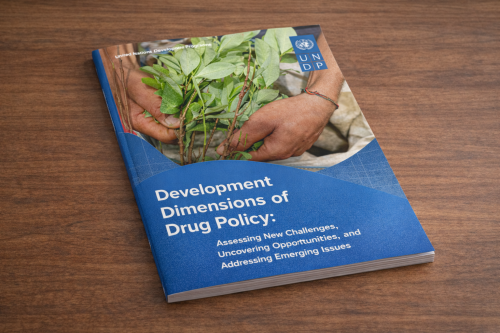
As we approach the annual UN Commission on Narcotic Drugs (CND) in Vienna next month - it is important to draw attention to a groundbreaking new discussion paper from the UN Development Programme launched last September at the UN General Assembly in New York: 'Development Dimensions of Drug Policy: Assessing New Challenges, Uncovering Opportunities, and Addressing Emerging Issues'
This was the first ever UN discussion paper to explore the implications of drug policy and law reform on the sustainable development goals, specifically including legal regulation of drugs. The paper covers a range of themes, including potential impacts (both positive and negative) of drug legalisation/regulation on sustainable livelihoods, governance, public health, human rights, and the environment. Transform’s senior policy analyst Steve Rolles worked as consultant and lead drafter on the report with an extended peer review group of academic, civil society and UN experts.
We will be serialising key sections of the paper on the Transform blog in the coming weeks, beginning with the scene setting introduction:
Both illicit and legally regulated drug markets have profound implications on human development and the realization of the United Nations Sustainable Development Goals (SDGs) and the pledge to leave no one behind by 2030.
The impacts of drug policy on drug use and drug markets, both positive and negative, intersect with multiple domains, including sustainable livelihoods (rural development and poverty reduction), governance, public health, human rights and environmental sustainability, which are explored in the subsequent chapters. While the SDGs do not explicitly address drug policy beyond a reference to “substance abuse” (SDG 3.5) and “communicable diseases” (SDG 3.3, which identifies people who use drugs as a key population), it is clear that the impacts of drug use, drug markets and drug policy cut across multiple SDGs and the pledge to leave no one behind.
It is inconceivable to envision the successful realization of our global goals without devising and implementing sustainable solutions to drug-related challenges. In this context, it is imperative that all stakeholders in the development field – national governments, multilateral agencies, civil society, academia, non-government organizations (NGOs) and the private sector – urgently raise their level of engagement.
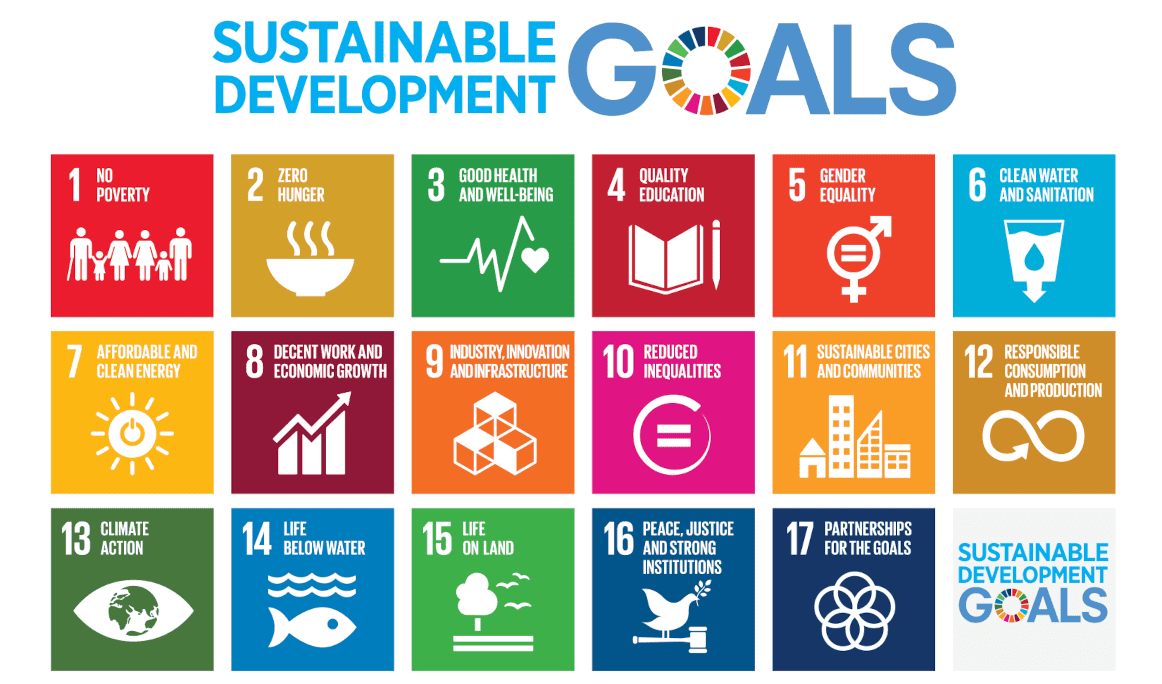
Evidence shows that conventional approaches to drug control rooted in punitive enforcement have targeted both people who use drugs and drug markets, proving largely ineffective at reducing the scale of drug consumption and the size of drug markets, and resulting in a range of negative unintended consequences. These consequences include the deterioration of public health, human rights violations and the undermining of sustainable development. As a result of these systemic failings, a growing number of countries have initiated policy and legal reforms involving a reorientation away from counterproductive punitive enforcement models, towards public health-led pragmatism, such as innovations in service provision, harm reduction, and decriminalization of drug possession and use.
In 2015, UNDP released a discussion paper on addressing the development dimension of drug policy. The United Nations system has also evolved, guided by the April 2016 Special Session of the United Nations General Assembly on the World Drug Problem, where United Nations Member States recognized that efforts to achieve the SDGs and address the world drug problem are interrelated and mutually reinforcing. In November 2018, the United Nations System collectively committed to supporting Member States in developing and implementing comprehensive, integrated, evidence- and human rights based, development-oriented and sustainable responses to the world drug problem. This commitment coincided with the launch of the International Guidelines on Human Rights and Drug Policy, co-developed by UNDP, the World Health Organization (WHO), the Joint United Nations Programme on HIV/AIDS (UNAIDS), the Office of the High Commissioner on Human Rights (OHCHR) and the International Centre on Human Rights and Drug Policy. The Guidelines have since been implemented in numerous settings. Reforms that decriminalize drug possession and use have had positive impacts on health and human rights. These reforms reduce the disproportionate criminalization and stigmatization of marginalized people and communities, enabling more effective health interventions.
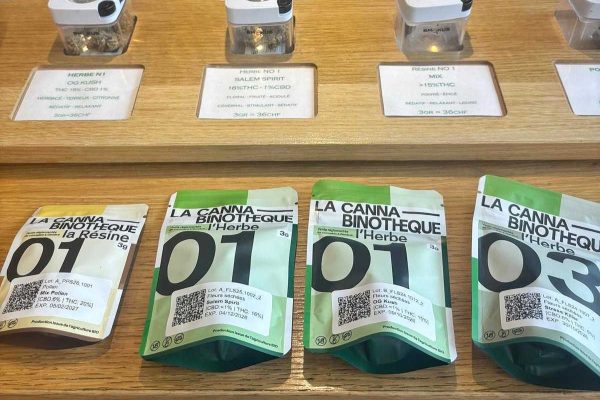
However, most drug markets remain prohibited and, by default, under the control of OCGs, limiting the impacts of decriminalization on the harms associated with illegal drug production, transit and supply. Harm reduction approaches also significantly mitigate harms created or exacerbated by prohibition and unregulated illegal supply. There has consequently been a growing trend towards extending the pragmatism of harm reduction and decriminalization into supply-side drug policy; legally regulated markets for formerly prohibited drugs are now emerging in multiple jurisdictions around the world for a range of drugs in different forms and at different scales.
The political and legal status of many of these reforms can be problematic or ambiguous. The reforms may be legal or quasi-legal at the state level but, in many cases, they do not comply with international drug treaty obligations. Hence, reforms have often progressed with little or no scrutiny or guidance from multilateral trade and development institutions, or from relevant civil society organizations in the international development sphere.
Understanding drug policy as an issue of sustainable development, and to respond to new trends and emerging issues, has never been more urgent. UNDP’s 2015 discussion paper, Addressing the Development Dimensions of Drug Policy, highlights how punitive drug control strategies have impeded progress across multiple development priorities - undermining poverty reduction, public health, governance, human rights, and environmental sustainability, especially for marginalized groups such as people who use drugs, Indigenous communities, women, and rural cultivators. In 2019, UNDP expanded on this work with Development Dimensions of Drug Policy: Innovative Approaches, which explored how countries are leveraging flexibilities within international drug control conventions to design more inclusive, gender-sensitive, health-oriented, and SDG-aligned policies and achieving better health and development outcomes.
The lack of engagement from key institutional expertise has resulted in the marginalization of development discourse in many drug policy reforms. The concept of a ‘just transition’ that prioritizes social justice and poverty reduction is, for example, familiar in the development sphere in the context of the shift to low carbon economies. It should be equally applicable to the transition from illegal to legally regulated drug markets but has yet to achieve any prominence in the political discourse. Development goals have historically been a low priority in drug control policy and law making. However, there is now a risk that these goals are also being marginalized when reforming failed drug control approaches, specifically in transitions to licit market models. The emergence of new licit drug markets on a significant scale offers unique opportunities to develop regulated market models that prioritize sustainable livelihoods, good governance, health, human rights and environmental protections, and indeed attempt to repair harms caused by generations of repressive enforcement approaches. Although there are examples of where such opportunities are being seized, there are also risks of past mistakes being repeated, which have already manifested in some cases. Problematic market dynamics that undermine development goals by fuelling inequality, exploitation and environmental harms are emerging with little scrutiny, and opportunities to establish markets that support the SDGs are being missed.
While the global community wrestles with the legal and political challenges about drug policy, the reality on the ground is one of increasing reforms, largely lacking in meaningful scrutiny, public debate, community engagement, or normative guidance on good practice. Given the trajectory of reforms, most notably regarding cannabis, but also regarding coca, plant-based psychedelics and other drugs, there is a growing dilemma on how to fill that void becoming increasingly urgent.
This is an edited extract of the original UNDP discussion paper - 'Development Dimensions of Drug Policy: Assessing New Challenges, Uncovering Opportunities, and Addressing Emerging Issues' which can be found here (with exec summaries available in English, French, Spanish and Portuguese)
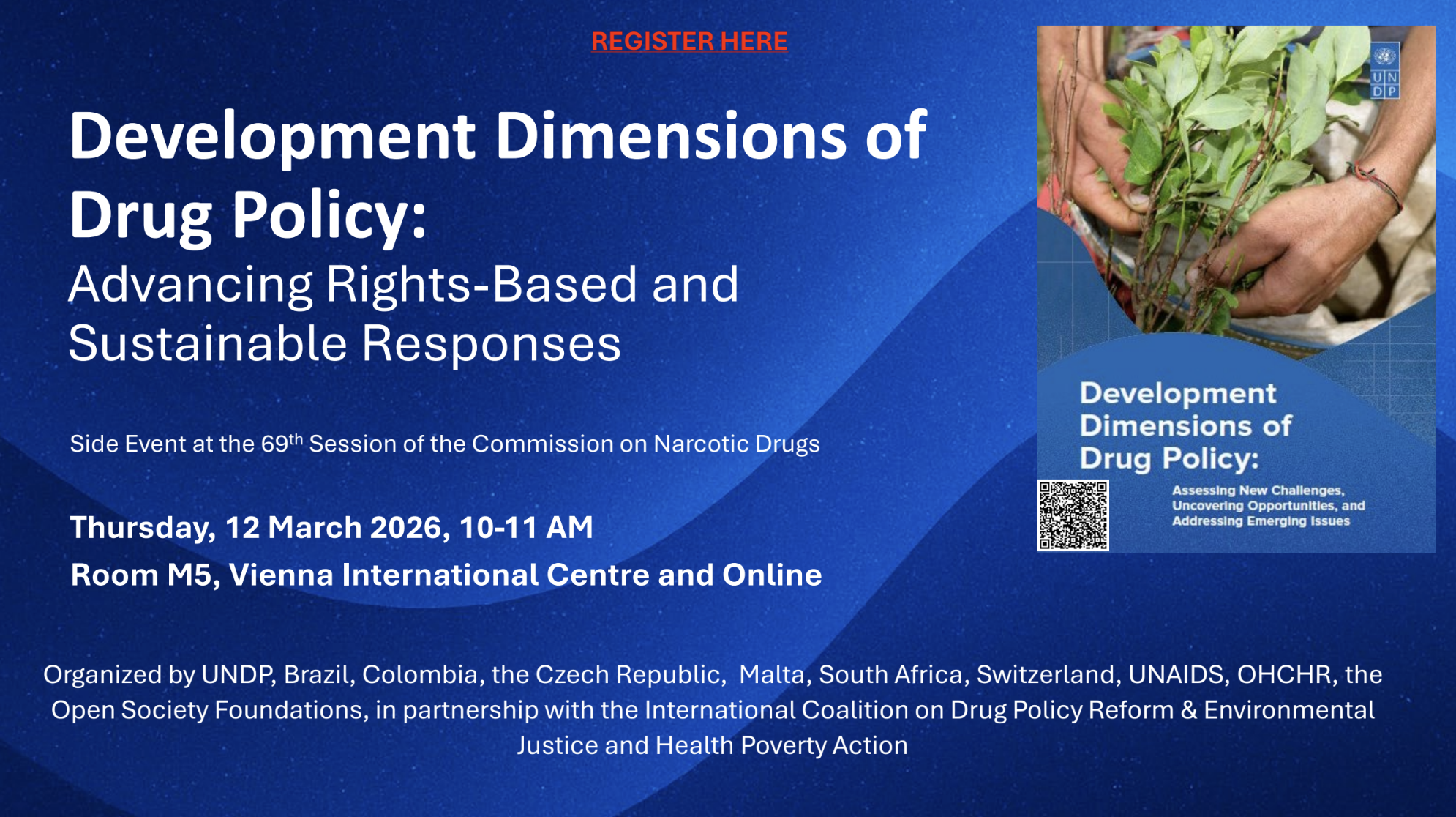
The discussion paper will be presented at a side event of the UN Commission on Narcotic Drugs in Vienna on Thursday, 12 March, 10-11 AM, Room M5. Register here to watch online. Organised by UNDP, Brazil, Colombia, the Czech Republic, Malta, South Africa, Switzerland, UNAIDS, OHCHR, the Open Society Foundations, in partnership with the International Coalition on Drug Policy Reform & Environmental Justice, and Health Poverty Action