14th April 2026
This article was written by Karina García Reyes and Gema Kloppe-Santamaría and was originally published by the cultural and political magazine, Nexos, on March 10, 2026
The recent capture and killing in Mexico of Nemesio Oseguera Cervantes (“El Mencho”), leader of the Cártel Jalisco Nueva Generación (Jalisco New Generation Cartel CJNG), has sparked a significant reaction among journalists and academics both within the country and abroad. Analysts have offered a range of reflections on the logistical and tactical aspects of the operation, as well as its implications for the World Cup matches to be held this summer and for Mexico’s security landscape in the short and medium term.
Despite the enormous costs that the death of the CJNG leader will have for levels of violence in the country, some analyses still present this event as a victory in Mexico’s so-called war on drugs, and even as a diplomatic achievement in the bilateral relationship between the United States and Mexico. According to this argument, since the operation demonstrated the Mexican government’s ability to deliver results demanded by the United States, it can be interpreted as a success in Mexico’s efforts to appease its northern neighbour.
Whenever an episode like this occurs – one need only recall El Chapo, El Mayo, and the capture, extradition, or killing of other less well-known capos – the debate almost exclusively focuses on figures, displays of force, past and future attacks, and predictions about Mexico’s new criminal landscape. What is left out of the discussion, however, is a fact well established by decades of academic research: the war on drugs is an unwinnable war, designed and promoted by the United States at the expense of thousands of citizens south of the Rio Grande.
From this perspective, the death of El Mencho cannot be considered a victory. Not only because the so-called “kingpin strategy” has proven ineffective – if not outright counterproductive – but also because the war on drugs itself is doomed to fail. As scholars working on violence in Mexico, we would like to offer a reflection on the fallacies of the global war on drugs, the responsibility of the United States in sustaining it, and the urgent need for Mexico and other Latin American countries to distance themselves from a security discourse that focuses on a handful of “bad hombres” from the Global South while ignoring the real key actors who sustain the global drug trade.
A lie repeated many times is worth more than a truth
It does not matter who is killed, when, or where: the supply of drugs does not stop. Annual United Nations reports make this clear: regardless of how many kingpins are captured, drugs continue to cross the border. The evidence produced by research centres, international organisations, academics, and non-governmental organisations is overwhelming and leads to the same conclusion: the war on drugs is doomed to fail.
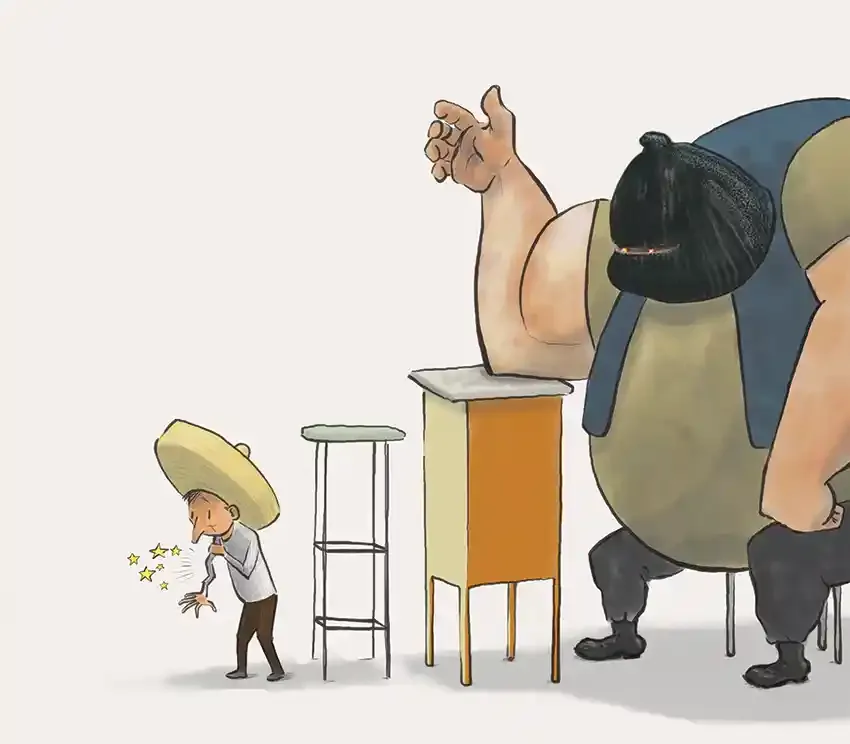
Of course, there are significant political and economic interests behind this policy, including the benefits it brings to the security industry and the reinforcement of U.S. hegemony in the region. The question, therefore, is not why the United States perpetuates this war, but why we continue to participate in and legitimise an official discourse that portrays the United States as “the good guys” and Mexicans as “the bad guys.”
The consequences of this simplistic and misleading interpretation of drug markets for Mexico and other producing countries in the Global South are enormous. So far, they have resulted in hundreds of thousands of people killed, hundreds of thousands more disappeared, and a society that, after witnessing all kinds of violence, has even forgotten why or how it ended up fighting a war that, in reality, belongs to others.
The enemy is (of course) in the South
It is worth recalling the lessons of history. This is not the first time the United States has declared a war at home and exported it to the rest of the world, particularly to its so-called “backyard.” During the Cold War, the United States identified communists as an internal enemy to be fought both within and beyond its borders. Latin America was viewed as a key battleground for containing communism and preventing the spread of Soviet influence, both because of its geographic proximity and because of a U.S. imperial vision that conceived the region as its natural sphere of influence.
To counter this supposed communist threat, the United States supported and imposed right-wing, militarised, anti-communist governments across the region. The priority was to contain a threat defined by Washington’s geopolitical vision and strategic interests, with little or no regard for human rights, democracy, or the rule of law in Latin America.
The results are well known. When the United States chose to “fight the Cold War” in Latin America, it unleashed dirty wars, disappearances, assassinations, massacres, and unspeakable atrocities. This legacy of violence continues to haunt the region’s fragile democracies. From the 1970s onward, and especially after the end of the Cold War, drug traffickers and gangs replaced communists and guerrillas as the United States’ primary security concern. Once again, Washington declared a war – this time on drugs – both at home and abroad. And once again, Latin America became a key battleground, under the assumption that drug supply, rather than demand in the United States, was driving the consumption epidemic.
From the earliest decades of its implementation, Mexico was considered a central actor in U.S. drug control policy, and the country came under pressure to confront the issue, sometimes through diplomacy, and at other times through unilateral and coercive measures. This does not mean that the war on drugs was purely imposed from above. Many drug policies also emerged domestically, and Mexican political elites benefited from the financial assistance and discretionary use of force that this war enabled, both in the 1970s – during the so-called Dirty War – and in the present day.
However, given the asymmetrical nature of the bilateral relationship, the United States has consistently set the rules of the game while refusing to assume responsibility for issues such as drug demand, arms trafficking, money laundering, and corruption within its own territory. At the same time, it has reproduced a discourse that casts drug traffickers – Mexican, Colombian, or Venezuelan – as the sole and principal enemy in this war. Meanwhile, the financial advisers, lawyers, accountants, IT consultants, international banks, and other actors who facilitate and sustain the highly profitable drug trade remain largely absent from the analysis.
Fighting someone else’s war
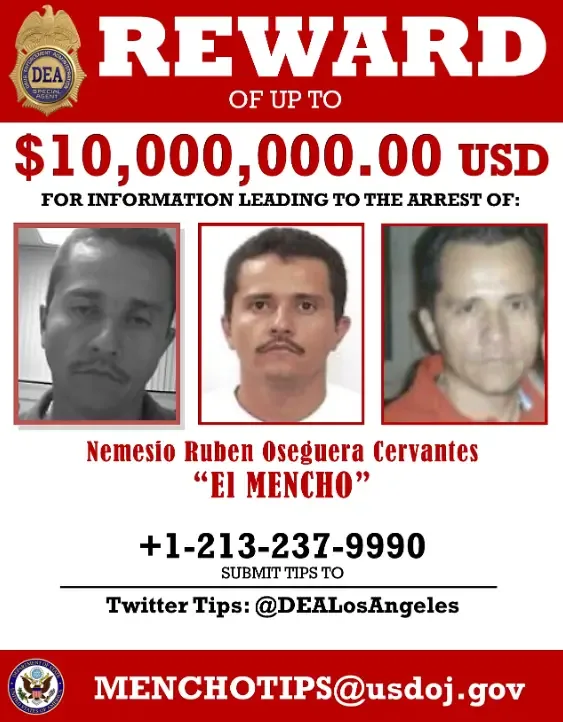
A recurring response to the capture and killing of El Mencho has been to highlight Mexico’s ability to respond effectively, even proactively, to US demands. El Mencho was a priority target for the US government. Indeed, the CJNG was designated a terrorist organisation in February 2025, and the US State Department offered a reward of up to $15 million for his capture. Against this backdrop, and considering Donald Trump’s repeated threats to send troops into Mexico to directly target so-called cartels, some interpreted this development as a Mexican victory: a demonstration of the country’s capacity to appease its northern neighbour and avoid trade reprisals or unilateral military intervention on Mexican soil.
But is it really a victory? What are the concrete benefits for the security and well-being of Mexican citizens?
The evidence suggests that when it comes to improving public safety, cooperation is not enough. Even during periods when Mexico’s security strategy aligned closely with U.S. interests and priorities, such as in the early years of the Mérida Initiative (roughly 2007–2012), the results were catastrophic for people on the ground.
Moreover, numerous examples show that even in the face of clear diplomatic gestures or acts of cooperation and compliance, the United States can be an unreliable partner. For instance, María Corina Machado presented her 2025 Nobel Peace Prize medal to President Donald Trump as a symbolic gesture to request greater US support for her leadership and for democratic transition in Venezuela. That support has yet to materialise.
In Mexico’s case, it is not even clear what the government might expect in return. Even under the most optimistic scenario, intensifying the war on drugs would only allow Mexico to avoid direct US military intervention. In other words, the only real “benefit” would be assuming responsibility for fighting the war on drugs without having the power to decide how, when, or even whether that war should be fought in the first place.
After El Mencho
In Latin America, we have been asking ourselves the same question ever since the United States killed Pablo Escobar – and we already know the answer. After El Mencho will come another kingpin, another enemy that the United States will claim must be fought, while the structural problems of money laundering, corruption, and arms trafficking that sustain the drug trade remain invisible.
In academia, we have reached a point of saturation: scientific evidence has repeatedly shown that the war on drugs is not only impossible to win, but profoundly harmful to the lives and well-being of societies. Rather than continuing to circle around questions of who the next cartel leader will be or what this supposed “victory” means for bilateral relations, we need to move toward a serious discussion of realistic and less harmful security policies – ones that respond to our own interests and priorities.
And if our neighbours to the North wish to continue fighting this war, then they should do so on their own territory.
Karina García Reyes
Researcher and lecturer in the Department of Criminology at the University of the West of England. She is the author of Morir es un alivio (Planeta, 2021).
Gema Kloppe-Santamaría
Researcher and lecturer in the Department of Sociology at University College Cork in Ireland. She is the author of En la vorágine de la violencia (Grano de Sal, 2023).