4th March 2026
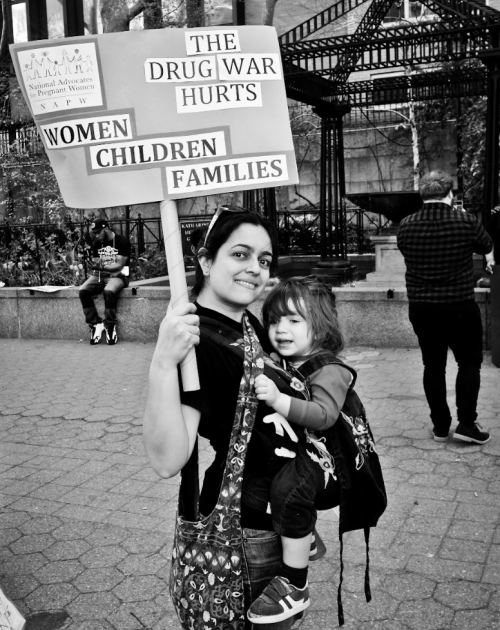
Like many punitive and outdated policy frameworks, prohibition does not affect everyone equally. Its harms are felt most sharply by those already marginalised, with a disproportionate, and often overlooked, impact on women.
At Transform we campaign to prevent these avoidable harms, recognising that a gender-transformative lens is needed to overcome the specific challenges that women who use drugs, or who are involved in drug markets face. Prohibitionist drug policy, in the UK and globally, must be replaced by a health and rights based approach in order to address issues such as disproportionate imprisonment rates, gendered stigmas and the threat of gender-based violence.
Although women make up roughly 25% of people who use drugs problematically, they face far greater barriers to support. Globally, in 2023, of peopple with substance use disorders, only 1 in 18 women accessed treatment services, compared to 1 in 7 men.
This disparity exists for a multitude of reasons; services are designed around male experiences and can disregard women’s unique needs. Male dominated spaces can be intimidating, especially if there is a lack of sensitivity for those experiencing domestic abuse and gender-based violence. And too often, women’s childcare responsibilities are not accounted for. These concerns are amplified for women of colour and those with diverse gender identities and sexual orientations.
Without gender-transformative harm reduction care, services can unintentionally reproduce the very harms they should be dismantling. If we fail to tailor drug policy to women’s needs, we risk widening, not closing, the treatment gap. This concern becomes particularly acute in the context of an evolving illicit drug landscape with a dramatic increase in potent synthetic opioids entering the supply chain.
Women are more heavily stigmatised for their drug use as it is seen to contradict traditional gender roles of femininity and caregiving. Mothers who use drugs are judged more harshly by society (and often themselves) in comparison to fathers. For this reason, many women hide their drug use, to protect their families from social service intervention and community shame.
We know that secrecy around drug use can increase the risk of fatal overdose. When women use drugs alone, without access to harm reduction information or peer support, the consequences can be deadly.
This is especially dangerous when we look at additional risk-factors which are rarely considered, such as the way women’s lower average body mass, coupled with a lack of gender-specific dosage information, increases the risk of overdose.
The harms experienced by women who use drugs are intersectional. Gender can intersect with race, class, sexuality, and immigration status, amongst other factors to intensify risk and shape how and if women access support: Fear of child removal discourages many mothers from seeking treatment. Survivors of domestic violence may be coerced into using drugs, or do so to cope with trauma. Women involved in sex work, particularly in criminalised settings, have to navigate additional layers of risk and stigma.
People with diverse sexual orientations and gender identities face an increased probability of problematic drug use, often linked to discrimination and social isolation. These risks are amplified for non-white women, who experience racial profiling, disproportionate criminalisation and systematic barriers to healthcare. Women with insecure immigration status may avoid services altogether for fear of detention or deportation.
Clearly, drug policy does not operate in isolation from wider systems of inequality and a gender-blind approach to decriminalisation or harm reduction risks entrenching disparities. This is why front-line drug services must genuinely work in tandem with trauma-informed mental health support and services for people who are unhoused to address the complex trauma and uncertain living conditions that many women who use drugs face.
One of the biggest barriers to achieving this is the ongoing criminalisation of drugs in most parts of the world, which disproportionately impacts women. Globally, 1 in 3 women in prison are there on drug-related charges. These convictions derail life chances, separate families and entrench poverty and other gendered harms.
A new UNDP discussion paper notes that, ‘since 2000, there has been a much faster growth in the female prison population (66 percent) than the male prison population (20 percent)’. Much of this rise is linked to low-level drug offences. In Colombia, research from Dejusticia found that the number of women in prison increased more than five-fold between 1991 and 2016, with nearly half imprisoned for drug related offences. ‘Of these women, 93 percent are mothers, and 52 percent are heads of household.’
This isn’t justice. In most cases, imprisonment is neither necessary nor proportionate. However, in 2023 Colombia passed a law introducing non-custodial community sentences for women convicted of drug trafficking offences who are heads of households.
Reforms like this begin to provide an alternative to the current punitive style, but they need to go further. Even with the wave of progress around decriminalisation and harm reduction, we need to be constantly mindful of how we might unintentionally be entrenching existing gendered stigmas and intersectional vulnerabilities.
Transform campaign for drug policy grounded in reality and motivated by social justice. Equality can never be fully achieved in a world where people are criminalised for using drugs. The ‘war on drugs’ is a failed experiment that has had a devastating impact on countless lives, driving violence against women and other preventable harms. There must be an attitude shift around women, and all people, who use drugs, in order to garner adequate support and funding for community-focused, women-led, integrated support services.
International Women’s Day is a chance for us to look around and, whilst celebrating the little steps forward, strengthen our calls for drug policies created by, and designed for, women.
The theme of this year’s International Women’s Day is #GivetoGain, emphasising the power of reciprocity and support. If you are able, please support Transform today by making a donation, thank you!