12th November 2026

Transform was proud to partner with Iniciativanegra in Brazil, and the Coalition for Environmental Justice and Drug Policy Reform on the publication of a new book last November; 'From Forest to Dust: Socioeconomic and Environmental impacts of the prohibition of the coca and cocaine production chain in the Amazon basin and Brazil'. You can download the book (as a free pdf) here in English, Portuguese and Spanish.
Transform's Mary Ryder and Steve Rolles co-authored Section III: DESTINATIONS exploring the impacts of the rapidly evolving Brazil - Europe cocaine pipeline, and the emerging global debates on alternatives to coca/cocaine prohibition. The second half of this chapter is published below - for the full chapter (with references), please use the book link above.
Understanding the role of Brazil in the European cocaine supply chain
In Europe, cultural perceptions of cocaine’s illegal origins remain largely in Colombia, embedded through the multitude of cocaine & cartel-based movies and TV shows that have permeated over recent decades.
Brazil’s growing role in cocaine exportation to European markets has been both overlooked and understudied.
Diversion of illicit cocaine flows from coca/cocaine production regions in Colombia, Peru and Bolivia to old and new routes via Brazil came as a response to heightened enforcement along older established trafficking routes. As so often happens with politically driven drug enforcement strategies, rather than disappear, the cartels mutated and evolved into smaller, more discrete organised crime networks.
In this context, West Africa also emerged as a crucial transit hub, as nascent African organised crime groups that were smaller, adaptive, and less visible, also found new opportunities to expand and gain control over the cocaine market.
Brazilian and Nigerian OCGs had already established working relationships in the 1970s, yet the cocaine trade between Brazil and West Africa consolidated significantly from the late 1990s onward. This reflected both a “southern shift” in the commodity chain, and a diversification of the actors, nationalities, and routes involved. West Africa became not only a transit zone but also a site of experimentation in trafficking practices, creating new logistical and criminal interdependencies between South America, Africa, and Europe.
The scale of this transformation was dramatic. In the 1990s, annual seizures of heroin or cocaine in African trading hubs such as Lagos rarely exceeded 200 kilograms, and in 1996 the entire continent accounted for less than 1% of global seizures. By 2006, however, the UN estimated that roughly one-quarter of all cocaine consumed in Europe - around 40 tonnes - was being shipped through West Africa.
Methodological challenges notwithstanding, available data, even if unable to map the precise contours of the trade, can unambiguously confirm Brazil’s central role in cocaine trafficking to Europe. According to Europol and the EUDA, over the years, Brazil has consistently been one of the top three departure points for the commodity, alongside Ecuador and Colombia.
Cocaine trafficking logistics have become increasingly dispersed across multiple Brazilian cities and ports. Santos and Paranaguá remain the main exit points, but seizures also implicate Salvador, Belem, Vila do Condé, Bahia, and Santa Catarina, showing an increasing diversification of routes.
In 2020 alone, around 71 tonnes of cocaine linked to Brazil, and destined for Europe, were seized (whether in country, Europe, or en route), compared with 67.5 tonnes linked to Ecuador and 32 tonnes to Colombia, indicating that Brazil has become the single most significant departure country for Europe-bound cocaine.
As the largest destination for Brazilian cocaine exports, the European destination points of entry have shifted over time. Whereas Spain and Portugal once dominated, today Belgium and the Netherlands—particularly the port cities of Antwerp and Rotterdam—have eclipsed the Iberian Peninsula as the primary gateways. Brazilian shipments have also been linked to secondary ports, such as Bristol in the United Kingdom.
Brazil’s developed maritime and air infrastructure, coupled with the adaptability of trafficking networks, has enabled it to become the central hub in the transatlantic cocaine economy, with Europe as its principal market.
Trafficking routes and modalities
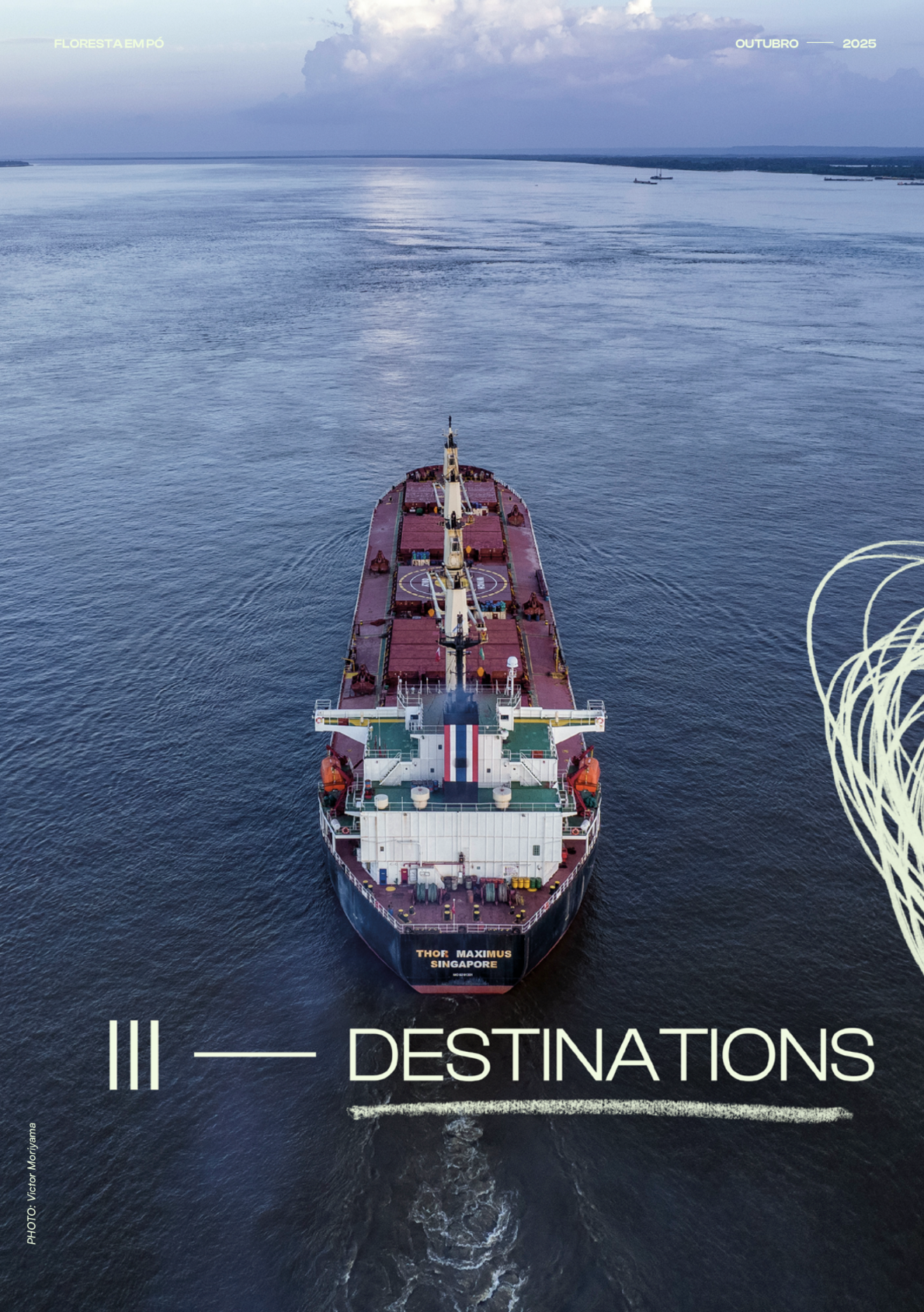
What makes Brazil so crucial in the cocaine market is its highly developed infrastructure and global trade connectivity. Criminal networks are able to exploit the same maritime, air, and road corridors that sustain Brazil’s legal economy with relative ease. The Port of Santos in São Paulo state exemplifies this role. It is among the largest container terminals in the world, moving 4.2 million containers in 2020 alone. Similarly, Brazil’s major international airports have frequent long-haul flights to Africa and Europe.
The dominant route for transporting cocaine from Brazil to Europe is maritime trade. This takes place either by concealing cocaine in legitimate cargo shipments or by pirating containers within ports, a method known as the ‘rip-off’. The latter tactic requires greater logistical capacity to intercept and unload the drugs before the container leaves the arrival port. Shipments often move to Europe directly across the Atlantic, but some go via the Caribbean, West Africa, or other parts of Africa. In the case of West Africa, in order to continue towards their destination, cocaine may be reloaded onto a container and shipped onwards to Europe, or unloaded and trafficked by land through North Africa.
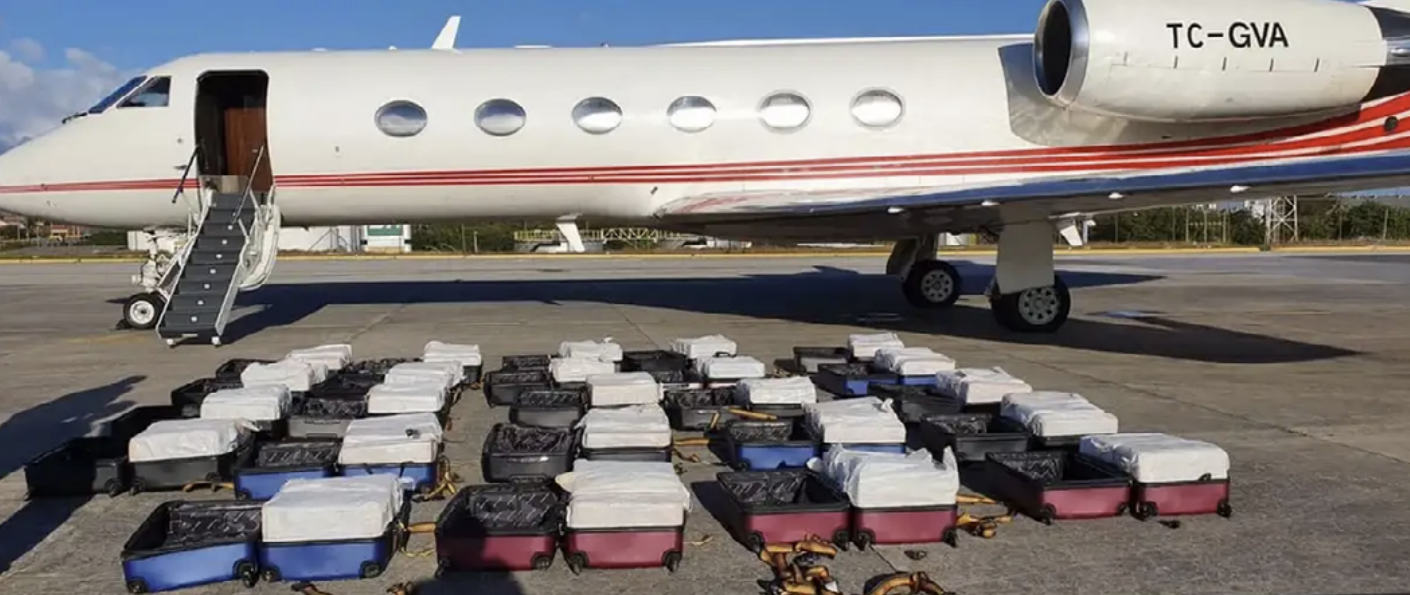
Private jets are also commonly used in the cocaine trade from Brazil to Europe. In February 2021, 578 kg were seized from a Falcon 900 bound for Portugal; in July 2021 the same jet was caught again, loaded with cocaine at Tires, Portugal; in Aug 2021, 1.3 tonnes (with a retail value of around 65 million euros, was seized on a Gulfstream IV at Fortaleza, Brazil, bound for Brussels. (see image below)
One implication of Brazil’s unique evolving position in the global cocaine supply chain is that the focus of drug trafficking towards external markets, where there are greater profits than the internal market produces, enables extremely rapid capital accumulation.
Brazil is not only a transit and processing country for cocaine bound for Europe either directly, or via West Africa; it is also a recruitment and human trafficking hub. Airports play a central role in sustaining what Cohen terms the “mule economy.”
According to the UNODC, Nigerian OCGs are the main players in trafficking small quantities of cocaine from Brazil using people recruited as drug couriers on passenger flights. Yet interviews in São Paulo reveal that most of the drug couriers recruited by Nigerians are not Nigerian, but also include people from Brazil, South Africa, Congo, and Senegal. Research further shows how the commodification of Nigerian couriers gave rise to new connections between Brazilian and African OCGs.
The significant profits generated from cocaine fostered a market in which criminal entrepreneurs initially acted as subcontractors in recruiting drug couriers, before assuming more central roles in the trade. These networks have diversified to include “low-cost” couriers, often Brazilians and Nigerians hired for small payments to carry limited quantities, and “higher-profile” couriers, such as businesspeople, relatives of elites, or individuals with diplomatic passports.
Brazil’s large and busy airports allowed traffickers to test different courier profiles in order to minimise detection, consolidating the country’s role as a hub of experimentation within the transatlantic cocaine economy.
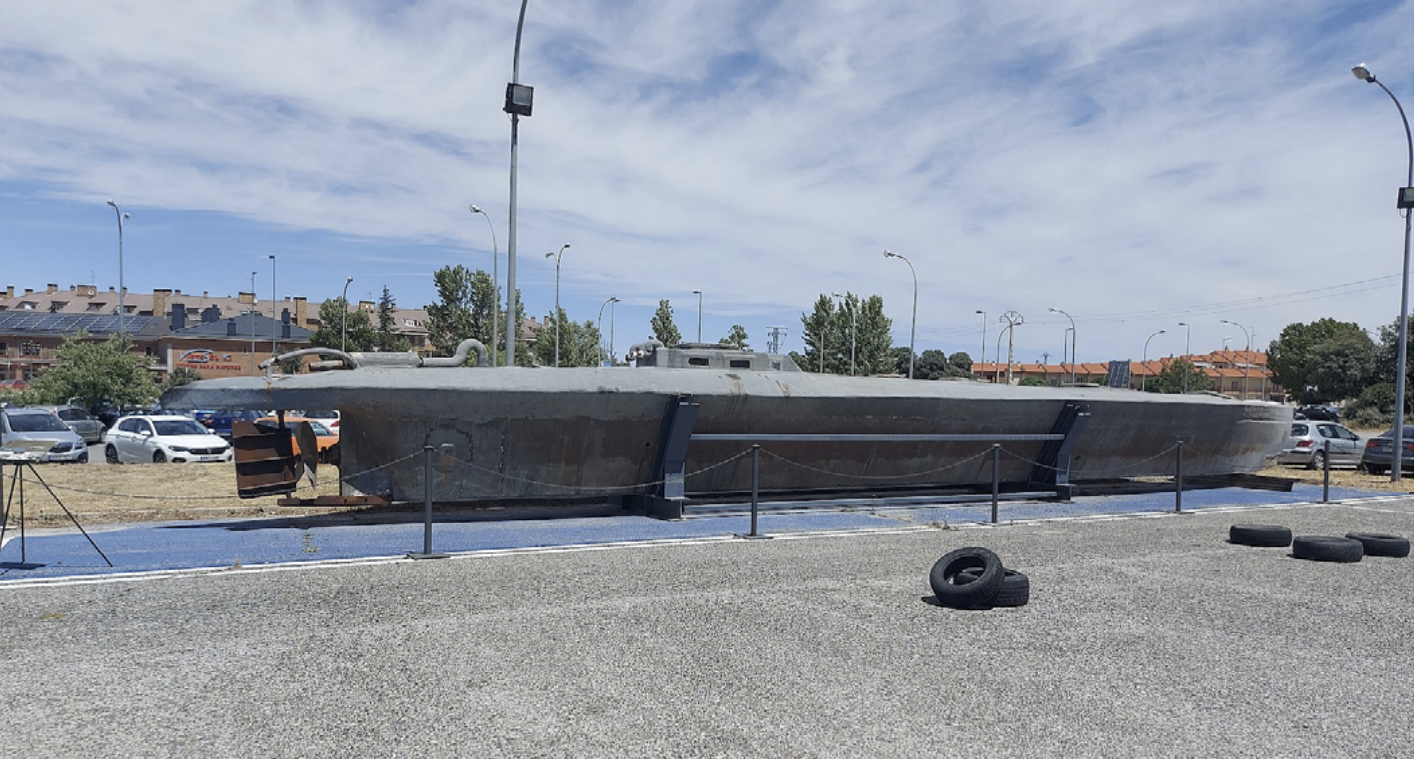
Alongside shipping containers, private jets and drug couriers, semi-submersibles are another new option for traffickers; custom-built vessels designed for maritime drug smuggling. With all or most of their hull submerged below the waterline, such seacraft are difficult to detect, enabling the clandestine transport of multi-tonne cocaine shipments across long distances. Over the past decade, most seizures of such vessels have been in the Americas, where they were built in remote Amazonian areas, particularly Colombia, and used to move cocaine across the Pacific Ocean from Colombia and Ecuador towards Central America and Mexico.
Until relatively recently, none had ever been intercepted on European waters. However, two cases demonstrate how this new option is opening up, one in 2019 and another in 2021, when Spanish authorities captured a 20 meter (65ft) semi-submersible carrying three tonnes of cocaine hydrochloride off the Galician coast. The vessel had begun its one-month voyage deep in the Amazon River Basin, sailing through Brazil before entering the Atlantic and making the transatlantic crossing to Europe.
Brazilian organised crime networks
Intelligence sources suggest that the PCC (Primeiro Comando da Capital), Comando Vermelho, and Família do Norte are the key organised crime groups involved in cocaine exports from Brazil to Europe. The PCC has expanded its presence in other South American countries and beyond, in Africa and Europe, and dominates several stages of the cocaine supply chain. Investigations have uncovered growing connections between Brazil-based OCGs and European-based OCG actors including the Italian ’Ndrangheta mafia, various Portuguese networks, and Balkan (Albanian-speaking) groups.
Illustrating the depth of these new alliances and networks, in September 2018, Brazilian authorities intercepted 1.2 tons of cocaine concealed in a shipment of heavy machinery departing from the port of Santos and destined for a company in Abidjan, Côte d’Ivoire. According to court records, Italian custody orders, and interviews with law enforcement, the operation was coordinated by a member of the Romeo-Staccu clan of the ’Ndrangheta mafia organisation. It worked in partnership with intermediaries in Abidjan, including Italian businessmen linked to the Italian Camorra mafia organisation. On the Brazilian side, the supply arrangements appear to have involved an individual associated with the PCC, facilitated by an ’Ndrangheta broker. Investigators suspect that this criminal consortium had been using heavy machinery shipments to smuggle cocaine since at least July 2017.
Brazil’s organised crime groups have become central players in the globalisation of the cocaine trade, forging durable partnerships with European mafias and developing increasingly sophisticated and adaptable trafficking operations.
Brazil and West African Drug Routes: overlaps with extractive industries and ecological damage
West Africa has emerged as a central hub in the transatlantic cocaine trade, particularly as a staging point for shipments leaving Brazil en route to European markets. For example, during 2021, 3 cocaine consignments in excess of 500 kg each, amounting to 2.9 tons, were seized in Brazil with destinations in Ghana, in addition to smaller consignments destined for Nigeria and Sierra Leone; and in March 2022, 1 ton of cocaine was seized in the Brazilian port of Santos from containers on their way to Belgium via Cote d’ivoire.
According to the UNODC, approximately 70% of cocaine seized in Africa between 2015 and 2021 originated in Brazil.
This pattern is not new: by the late 1990s, the Colombian Norte del Valle cartel is said to have been the first to establish the South America-West Africa passage, which then rapidly expanded during the 2000s. The South America-West Africa route is widely known among scholars and maritime officials as the Highway 10 transatlantic route, which became infamous centuries earlier as the path along which millions of enslaved Africans were transported in the opposite direction to the Americas. It offers the shortest and most navigable route across the Atlantic for those moving commodities or people, legal or illegal.
Contemporary trafficking now exploits these structural and historical linkages. The Lusophone corridor connects Brazil to Guinea-Bissau, Cape Verde and Angola, where shared language, political, and commercial ties facilitate illicit as well as licit trade. More recently, Mozambique and Nigeria have also become significant entry points for Brazilian cocaine shipments to Africa. According to UNODC, Nigerian groups dominate trafficking routes across Africa. Alongside maritime cargo, air couriers departing São Paulo and Rio de Janeiro also supply West African cities.
As in Brazil itself, the entanglement of cocaine trafficking, corruption, and extractive industries is central to the political economy of West African transit states. In Mozambique, for example, political elites have facilitated cocaine flows through their control of ports, customs and policing, often in exchange for bribes, while simultaneously overseeing other lucrative trades such as timber, ivory and rhino horn.
These dynamics echo those in Brazil, where cocaine profits are routinely laundered into legal, quasi-legal and illegal extractive sectors and agribusiness, including land grabbing, ranching, timber and mining. Both regions are experiencing rapid deforestation and the commodification of valuable ecosystems.
The 2021 Organized Crime Index highlights how connected and widespread environmental crimes are across the region:
- Illicit gold mining across the Sahel and coastal West Africa exacerbates instability, corruption, and severe environmental degradation;
- Illegal oil trade and wildlife poaching supplies Asian markets;
- Illegal logging threatens already fragile forests.
The environmental impacts of these illicit economies compound the harms of climate change. What the UNODC refers to as the ‘nexus’ between cocaine trafficking, corruption, and financing of environmentally damaging extractive industries is less well documented in Africa than in South America, but the corrosive dynamics appear remarkably similar - and drug prohibition is the common denominator.
According to the 2021 Organized Crime Index, the cocaine market is not only among the most prominent criminal economies in West Africa but is the one that registered the greatest increase in pervasiveness between 2019 and 2021.
Corruption emerges as a defining feature of this expansion, more so than in any other criminal market. Because cocaine is a high-value transit commodity, its trafficking fosters structured protection economies that extend to senior levels of the state. Officials at ports, airports, customs, and within law enforcement often play enabling roles, creating dense networks of complicity that compromise governance and political stability. In Guinea-Bissau, for example, the cocaine trade has been linked to a reported coup attempt in February 2023.
Environmental impacts of illicit economies are increasingly shaping community tensions, resource scarcity, and displacement across West Africa. As ecosystems collapse under the pressures of extractive industries and climate impacts, criminal groups are able to exploit the vacuum by assuming responsibility for basic needs such as water, further embedding themselves into local political economies.
The cocaine trade not only links Brazil and Europe through West Africa but also reveals how transnational organised crime, corruption, and environmental harm are mutually constitutive.
Drug enforcement resources
Over the past several decades, drug law enforcement budgets have increased dramatically, both nationally and internationally. These budgets remain highly opaque in terms of where and how they are spent, so it is not possible to provide detailed breakdowns of European spending targeting cocaine markets specifically.
The trajectory of spending of public funds on enforcement, however, seems clear. EU’s Internal Security Fund (ISF) 2023–2025 work programme, establishes EU system for law-enforcement cooperation, including the targeting of organised crime and drugs with a budget of €222.4million Euros. It explicitly incorporates direct awards to the Maritime Analysis and Operations Centre – Narcotics (MAOC-N) “to disrupt maritime and air drug trafficking routes to the EU,” but does not detail a drugs-only subtotal, or breakdown by drug. More dramatically, in the United States, the Drug Enforcement Administration’s (DEA) budget rose from $65 million in 1972 to $3.28 billion in 2021.
The figures underscore a persistent pattern: the illegal cocaine market has expanded alongside growing investment in enforcement designed to reduce or eradicate it.
The emerging European debate on alternatives to drug prohibition
As the failures of supply side drug enforcement have become more evident, despite the increasing resources being directed towards it, so the calls for exploring new policies - that can more effectively deliver on the shared aspirations of the global community to protect and enhance the ‘health and wellbeing’ of humankind - have grown in volume.
As in much of the world, in Europe there has been a growing acceptance that criminalisation of people who use drugs has been ineffective as a form of deterrence, that it diverts resources away from proven public health interventions, and is actively harmful in terms of the human cost of arbitrary mass criminalisation. There has correspondingly been a general trend away from punitive user-level enforcement towards various forms of depenalisation/decriminalisation to reduce or end criminal sanctions for possession of small amounts of drugs for personal use; and an increasing emphasis on public health-led treatment and harm reduction approaches.
Perhaps the most well known such reform has been in Portugal - where personal possession of all drugs was decriminalised as part of a wider shift towards a public health led model, and similar reforms have since spread across much of the continent. This evolution in policy thinking seeks to pragmatically manage the realities of drug use in society rather than to continue demonstrably counterproductive efforts to eradicate them by force.
It is a stance now proactively endorsed by all UN agencies (including the WHO, UNOHCHR, UNODC, UNICEF etc.) in the 2019 ‘Common Position Statement’ on drugs, which called on member states “to promote …..the decriminalization of drug possession for personal use” and to “to call for changes in laws, policies and practices that threaten the health and human rights of people”.
A new discussion document from the UN Development Program has highlighted that: ‘…most drug markets remain prohibited and, by default, under the control of OCGs, limiting the impacts of decriminalization on the harms associated with illegal drug production, transit and supply’ and that ‘There has consequently been a growing trend towards extending the pragmatism of harm reduction and decriminalization into supply-side drug policy; legally regulated markets for formerly prohibited drugs’
This emerging drug policy reform trend has, thus far, mostly manifested with changes to domestic cannabis markets for non-medical use, with more than half a billion people globally now living in jurisdictions with some form of legally regulated adult access. Cannabis has become an exit door to prohibition.
In Europe, cannabis reforms that enable legal adult access for non medical use are being implemented in Germany, Luxembourg, Malta, Switzerland, Czechia, and the Netherlands. These cannabis reforms have created space for similar policy debates to play out for other drugs widely considered more risky, such as cocaine.
Indeed, in recent years, a nascent debate on the possibilities for legal regulation of cocaine markets has begun in Europe, largely driven by political leaders at a municipal level.
Cities have always been on the front line of the violence of the ‘war on drugs’, where prohibition’s systemic failures have been most visible and acutely felt. On the other hand, cities have also been where key alternative responses and reforms have been pioneered. From the early harm reduction interventions in the 1980s in response to the HIV crisis, through innovations such as supervised drug consumption facilities and drug checking, to law reforms including decriminalisation, and more recently cannabis regulation, drug policy history shows that change, in Europe and indeed globally, has almost always been a bottom-up process.
Leadership has rarely been shown by national governments or multilateral bodies. Instead, it has been local actors; activists, local agencies, NGOs, local councils, and municipal governments that have driven change. They have shouldered the political, reputational and legal risks, and weathered the media storms, to gather the data, establish best practice, and win over the public by making communities safer for everyone. Only after protracted public battles have these initially controversial innovations slowly percolated up into national and eventually international best practice guidelines.
This pattern seems to be repeating itself with the debate around legal regulation of drugs other than cannabis, including coca and cocaine.
In the Netherlands, Amsterdam’s mayor, Femke Halsema, has been a high profile reform advocate, highlighting the links between prohibition and local harms of the illegal drug market, particularly associated with organised crime related violence in the Netherlands cocaine market.
“It’s time to explore the possibilities of sensible, legal regulation of substances, to take control instead of leaving it to criminal markets”- Femke Halsema, Mayor of Amsterdam.’
The Amsterdam mayor has been joined by a growing list of other European municipal leaders - including Mayors of Brussels (Belgium), Warsaw (Poland) and Bern (Switzerland) in supporting this public debate on how alternatives to stimulant prohibition might function.
Both Bern and Amsterdam are exploring models for medically prescribed cocaine preparations, somewhat similar to the heroin prescribing models pioneered in Switzerland in the 1990s. Such provision of cocaine - which has been long available as a medical substance, used as a local anaesthetic - is technically legal under international law as a clinical intervention within a harm reduction context, although the treatment modalities for stimulant prescribing are underdeveloped.
The possibility of pilot models for legally regulated availability of cocaine powder for adult recreational use have also been explored - although these innovative proposals face technical challenges, as well as multiple political and legal obstacles from national governments and multilateral institutions.
More realistic in the short term, perhaps, is the possibility for coca based products, such as coca tea, coca leaf or mambe (that only contain a small amount of the active cocaine alkaloid) to be imported and sold in European markets - particularly if coca’s legal status under the UN conventions is revisited.
The emerging coca/cocaine policy and law reform debate in Europe obviously overlaps similar debates happening in South America - most notably in Colombia, but also in Brazil and elsewhere - but has distinct dynamics, reflecting differing local challenges and priorities.
In Europe, public health concerns, particularly around visible street drug use and drug related deaths, have a higher profile in driving the reform debate. By contrast, security issues relating to cartel violence and corruption, as well as indigenous rights, traditional use of coca, and environmental impacts of the illicit trade have a relatively much higher profile in parallel public debates in South America.
Crucial to finding meaningful solutions to the problems associated with the illicit trade will be understanding the interconnected and global nature of both the cocaine supply chain, and the international legal and policy instruments that have so dramatically failed to control it. Punitive enforcement designed to address problems on the streets of European cities can have perverse impacts in empowering and enriching organised crime groups, undermining rights, and fueling environmental destruction on the other side of the world.
Brazil has an urgent role to play in shaping reform. Given the profound and ongoing social, environmental, and governance crises driven by prohibition, Brazil, like Colombia, cannot remain on the sidelines of global drug policy debates. Its frontline experience with the devastating impacts of the cocaine trade gives it both the legitimacy and authority to advocate for change.
Solutions, however, can also be global in their scope and impact - but require the global community to work together. As the UNDP have noted ‘there is a strong argument that the concept of ‘shared responsibility’ in addressing global drug-related challenges applies to mitigating the harms of the war on drugs as much as fighting it in the first place.’
The complete chapter, with references, is available here
Methodological notes
The available data on cocaine trafficking between Brazil and Europe (and via West Africa) is fragmentary and should therefore be interpreted with care. Key statistics on illegal drug markets come from law enforcement agencies, and are shaped by the resources, political priorities, and strategies of state governments and agencies. They are also attempting to surveil ever-shifting trafficking routes and market actors, constantly adapting to interdiction pressures and new opportunities, so analysis and established assumptions can date rapidly. Academic research on this supply chain remains even more scarce and lacking in fieldwork-based data. On top of the challenges intrinsic to studying illegal markets, researchers often struggle to gain access to key sites, such as ports, that might allow them to trace these flows empirically, and additionally have to contend with the reluctance of government actors to open themselves to, or fund, independent critical scrutiny of a historically failing policy model.
In this context there is an overreliance on data and market analysis from government and related institutional sources, particularly outputs produced by UN Office on Drugs and Crime that oversees the international drug control system, and other state agencies (that supply UNODC with national data, and in many cases also provide its funding) with long term institutional and political investments in maintaining the ‘war on drugs’ status quo. Data from member states, received and compiled by the UNODC, has already been shaped by domestic political and institutional forces that may seek to over- or under-estimate markets depending on the prevailing political narrative (for example, to and justify calls for more enforcement spending, or to demonstrate success).
Furthermore, there has been a long term focus on enforcement-led data, such as drug seizures and arrests. This is problematic as these are process indicators that can often reflect enforcement activity rather than providing an accurate picture of the market of supply chain dynamics. Enforcement indicators can often be misleadingly used to demonstrate ‘success’, providing support for ‘tough on drugs’ political narratives, and diverting attention from more systemic failures on health and other outcomes. Seizures are a good example; proclaiming record seizures, with the political theatre of enforcers posing with photos of huge cocaine hauls that have ‘preventing x tonnes of cocaine from reaching the streets’, can conveniently obscure more meaningful public health outcome measures around, for example rising use of cheaper, purer, more available cocaine, and related health harms, as outlined above.