3rd November 2026

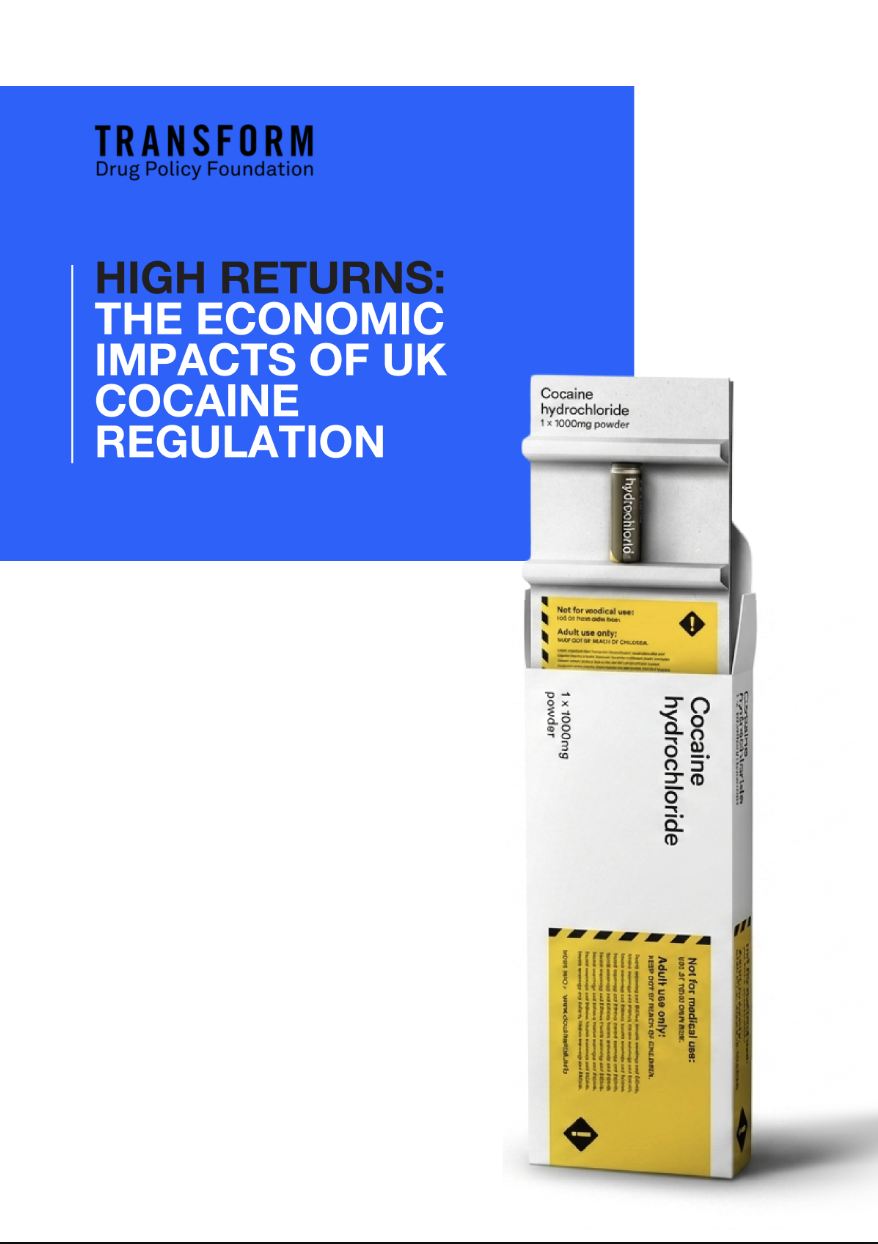
This is the introduction from Transform's new analytical report: High Returns: The Economic Impacts of UK Cocaine Regulation. Available online Nov 5th
The emerging debate on legal regulation of cocaine has been driven by the failure of the war on drugs. For a policy framework established under the Misuse of Drugs Act 1971, with the stated goals of deterring use, restricting supply, reducing crime, and protecting public health, the UK's punitive enforcement led response to cocaine has been both hugely expensive and a stunning generational failure on all meaningful metrics.
Consider some key facts:
- Since 2010 cocaine has become cheaper, purer and more available than ever before.
- Since 2010 cocaine has risen to become the UK’s second most popular illegal drug after cannabis - with 2.1% of adults and almost 3.8% of young people in England and Wales using the drug (2023-24)(1) - the highest level in Europe.
- The illegal cocaine market is estimated to be worth somewhere between £3.8 and £11.6 billion pounds (in turnover) annually in the UK (2)- with the untaxed profits accruing entirely to organised crime groups (OCGs).
- Global cocaine production is at its highest ever level.(3)
- Cocaine-related deaths in England and Wales have increased from 11 in 1993 to over 1297 in 2024 - a more than 100-fold increase.(4)
- Cocaine treatment admissions increased 9-fold between 2010-2024. (5)
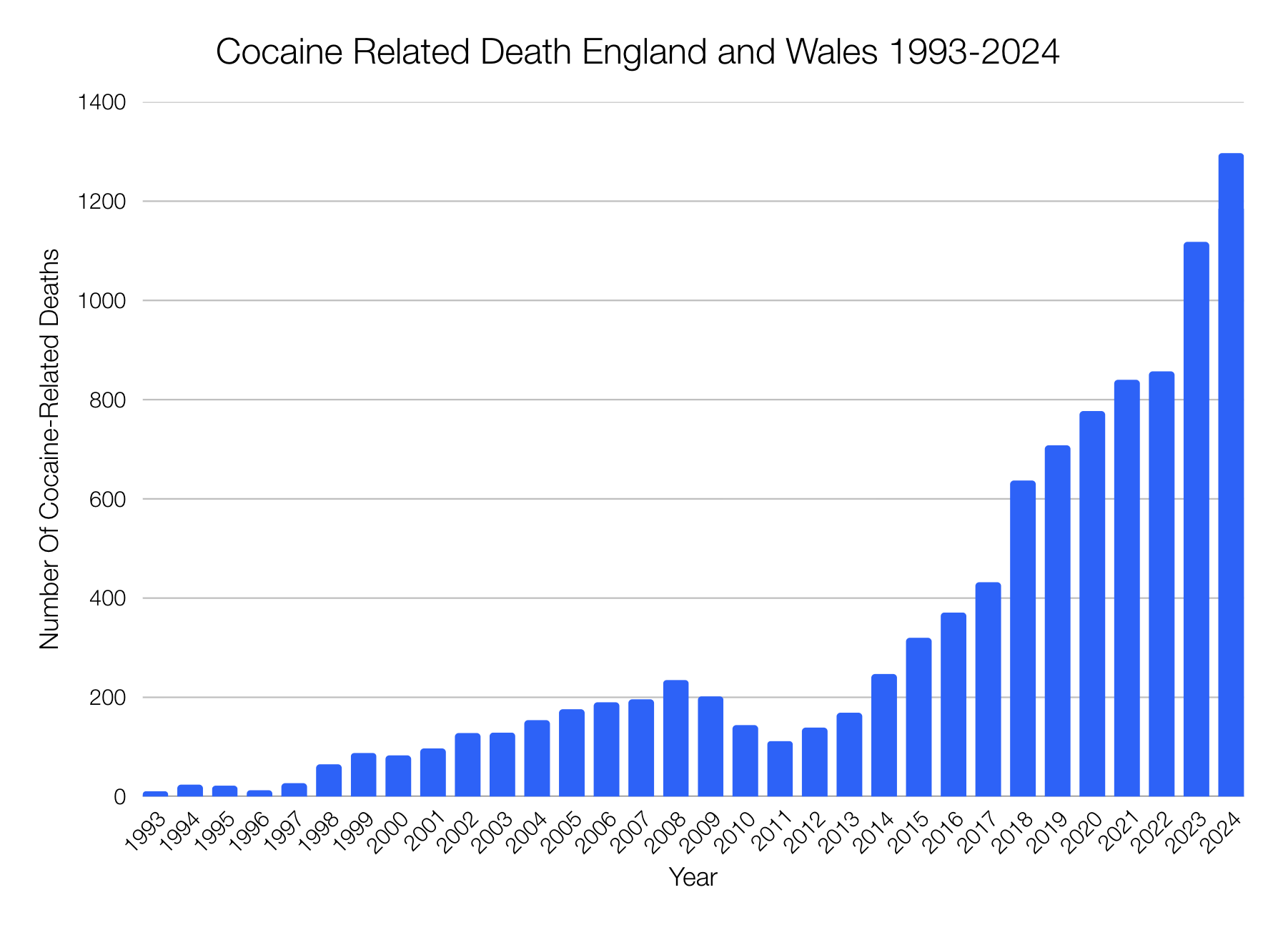
Highlighting the long-term systemic failures of the UK and, indeed, global response to rapidly-expanding cocaine markets is uncontroversial. Data reporting and analysis from the UK, the EU Drug Agency,(6) and the UN World Drug Report, as well as the specialised cocaine market reports produced by the UNODC paint a clear and consistent picture.(7)
Other voices have long highlighted the wider harms of this failure - on human rights, on the environment, and in terms of undermining the achievement of the Sustainable Development Goals more broadly. The evidence is clear; a punitive enforcement led ‘war on cocaine’ has failed even on its own narrow terms, ultimately to create a ‘drug free world’. It has also imposed enormous costs on public resources while being actively counterproductive: fuelling crime, violence and corruption; undermining governance and sustainable livelihoods across the world; and accelerating deforestation and biodiversity loss in the world’s most ecologically vulnerable regions - making realisation of climate goals all but impossible. (8) Far from reducing the harms associated with cocaine markets, this approach is exacerbating them. Policy decisions taken in the UK and other key consumer markets in the Global North have profound implications along the entire supply chain - far beyond our narrow domestic concerns.
Where the controversy does arise, however, is on how to move forward in response to these obvious historic failings. As Rt Hon Helen Clark (Chair of the Global Commission on Drug Policy, former Prime Minister of New Zealand and Administrator of the United Nations Development Programme) noted:
“As consensus grows that the ‘war on drugs’ has failed, so does the need for a frank exploration of the alternatives. We all have a responsibility to consider what might replace the status quo, and we need to think about how that applies to all drugs. A meaningful exploration of the regulation of stimulant drugs is a key part of that process.”(9)
Change is possible. Reforms to cannabis policy have witnessed implementation of legally regulated access models for non-medical cannabis on every continent over the past decade. From a standing start in 2014, today more than half a billion people live in jurisdictions implementing some form of legally-regulated adult access to formally-prohibited cannabis. There is much to learn from the outcomes of these reforms but, crucially, what seemed impossible barely a decade ago is now becoming a reality across the globe.
The progress with cannabis reform has created space for a debate around legalisation and regulation of other drugs including plant-based psychedelics, kratom, coca, and extracted cocaine, alongside innovative thinking about substitute prescribing, such as heroin assisted treatment and other forms of ‘safer supply’ prescribing. The arguments for displacing markets controlled by profit-motivated OCGs with markets responsibly regulated by
government acting in the public interest are essentially the same. Whatever the specific risks of a particular drug or preparation, they will always be increased in the context of criminalised use and illegal unregulated production and supply. Where established or growing demand for a drug collides with its prohibition, a lucrative profit opportunity is inevitably created. If demand is not met through legal channels, then criminal profiteers will always seek to exploit the profit opportunity that is handed to them by prohibition.
In light of the increasing demand for cocaine and unprecedented levels of illicit production - despite the billions invested in punitive enforcement - policymakers are confronted with a stark choice: either regulate the market to mitigate the harms it inflicts on people who use cocaine and the broader community, or allow the $100+ billion annual global trade to remain under the control of organised crime.
Transform has explored the detail of what regulation of the coca/cocaine supply chain could look like in their groundbreaking 2020 publication ‘How to regulate stimulants - a practical guide’. This book (available as a free pdf download in English, French, Spanish and Portuguese), (10) has already informed the burgeoning international debate on cocaine regulation:
- In Colombia, the first-ever bill proposing a regulated domestic model for coca and cocaine, alongside a treatment and harm reduction response for people who smoke crack, was drafted in 2022 - based on Transform’s proposals - and tabled in the Senate. The Bill was sidelined when a presidential election was called. However one of its key supporters, Gustavo Petro, went on to win the presidential election. During his term he has been a vocal advocate for an end to the drug war on the global stage.
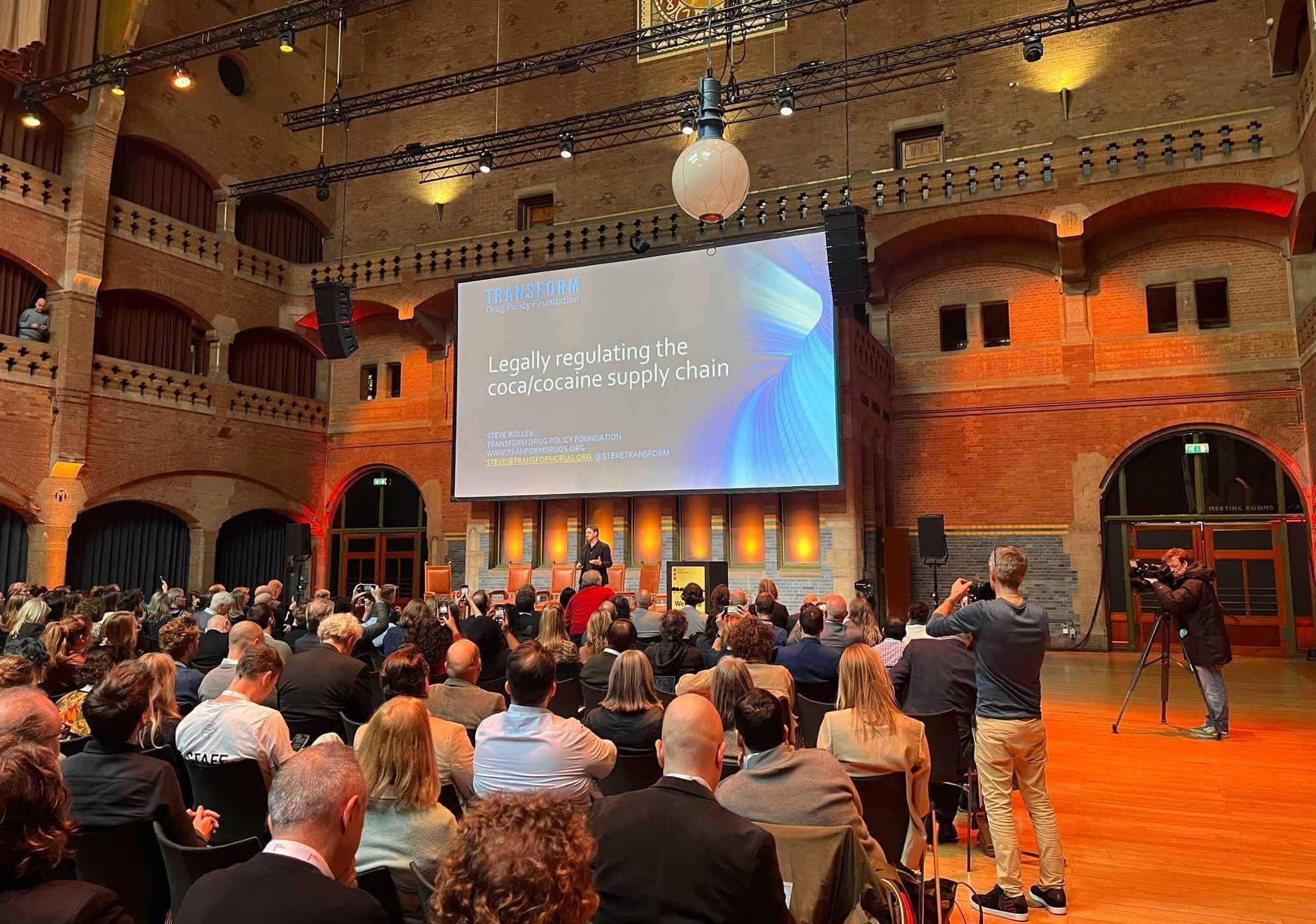
- The Mayor of Amsterdam, Femke Haslema, has been another high-profile advocate for responsible cocaine regulation - organising a major international conference in partnership with Transform and other civil society organisations, to explore the options for reform with other city mayors, and launching the ‘Dealing with Drugs’ manifesto to drive change forward.(11)
- The Swiss capital, Bern, has been developing a pilot model for regulated cocaine in response to the persistent failure of enforcement responses. (12) The city’s Mayor joined the Amsterdam regulation conference organised by Mayor Femke Haslema, and has endorsed the ‘Dealing with Drugs’ manifesto.
The economic arguments for reform
Given that all proceeds from the UK market for non-medical cocaine currently accrue to unregulated producers, suppliers and OCGs, legalisation offers an opportunity to move a multi-billion pound international trade into the legal economy where governments can regulate it to reduce social and health harms (associated with both use and the illegal market) as well as collecting what is currently foregone tax and sales revenue. Transform's detailed new analysis estimates the potential for multi-billion annual windfall in treasury revenues under our proposed responsible regulation model.
A move away from costly and ineffective punitive enforcement also holds the promise of extensive savings across the criminal justice system (CJS) - our analysis suggesting huge savings of annually across the CJS.
The potential exists for this substantial and ongoing tax revenue for the treasury, that can support - amongst other government priorities - reinvestment into health and social programmes targeting socially, economically and racially-marginalised communities that have been most harmed by the war on drugs, both in the UK and internationally.
Economic arguments for drug policy and law reform, most prominently around cannabis legalisation/regulation, have demonstrated high political salience with policy makers and public alike. Taxpayers, understandably, want to see positive outcomes from public spending and are increasingly aware that punitive enforcement directed against people who use and supply is expensive, ineffective and often counterproductive - undermining public health, fuelling crime, and creating downstream costs across the CJS and health systems.(13)
For a government seemingly unbothered by the historic failures of punitive prohibition, but now facing extreme budgetary pressures, the economic benefits of legalisation and regulation of drugs, in terms of treasury income and savings across the overburdened CJS may prove highly persuasive. US research suggests that, among the various arguments for legal regulation, it has been the economic case for cannabis reform that has achieved the widest public support.
The economic argument is, however, only one element of a wider case for reform that includes promoting equity and social justice and sustainable development, protecting public health, reducing cocaine market-related crime, increasing youth safety, protecting personal liberties, and protecting the environment.
While the economic case for reform is compelling, Transform does not believe it should be the primary driver for a move to a legally regulated market. Rather, economic benefits of reform should be seen as a bonus, a ‘peace dividend’ as the ‘War on Drugs’ is retired as a failed policy paradigm.
The Treasury gains from cocaine and other reforms should be used, at least in part, as an enabler of an urgently needed scaling up of evidence-based prevention, treatment and harm, as well as wider drug policy goals including repairing the generational harms of punitive drug enforcement, both domestic and international.
References:
1.ONS, Dec 2024. Drug misuse in England and Wales: year ending March 2024
https://www.ons.gov.uk/peoplepopulationandcommunity/crimeandjustice/articles/drugmisuseinenglandandwales/yearendingmarch2024
2. UK Home Office, 2020, Black review of drugs: evidence pack
https://assets.publishing.service.gov.uk/media/5eafffedd3bf7f65363e4fda/Review_of_Drugs_Evidence_Pack.pdf UK Home Office. June 2026. Wastewater Analysis: Estimating Rrug consumption
www.gov.uk/government/publications/wastewater-analysis-estimating-drug-consumption/wastewater-analysis-
estimating-drug-consumption
3.UNODC.2025. World drugs report 2025 www.unodc.org/unodc/data-and-analysis/world-drug-report-2025.html
4.ONS. 2025. Deaths related to drug poisoning in England and Wales: 2024 registrations
www.ons.gov.uk/peoplepopulationandcommunity/birthsdeathsandmarriages/deaths/bulletins/deathsrelatedtodrugpoisoninginenglandandwales/2024registrations
5.NDTMS 2010. (3272 people stated treatment for cocaine)
www.drugsandalcohol.ie/16042/1/statisticsfromndtms201011vol1thenumbers%5B1%5D.pdf 2024 (30,249 people started treatment) www.gov.uk/government/statistics/substance-misuse-treatment-for-adults-statistics-2023-to-2024/adult-substance-misuse-treatment-statistics-2023-to-2024-report#peoplestarting-treatment-substances-age-and-referral-source
6.EUDA, 2025, Cocaine – the current situation in Europe (European Drug Report 2025)
www.euda.europa.eu/publications/european-drug-report/2025/cocaine_en
7.UNODC. 2023. Global report on cocaine 2023 www.unodc.org/unodc/en/data-and-analysis/the-cocaine-
market.html UNODC.2025. World drugs report 2025 www.unodc.org/unodc/data-and-analysis/world-drug-report-2025.html
8.United Nations Development Programme, 2025. Development Dimensions of Drug Policy: Assessing New
Challenges, Uncovering Opportunities, and Addressing Emerging Issues www.undp.org/sites/g/files/zskgke326/files/2025-10/undp-development-dimensions-of-drug-policy-ex-summary-en.pdf
9.Transform Drug Policy Foundation, 2020, How to Regulate Stimulants: A Practical Guide
https://transformdrugs.org/publications/how-to-regulate-stimulants-a-practical-guide
10.ibid
11.See: www.amsterdam.nl/dealingwithdrugs/
12.Revill, John. Dec 2023. Swiss capital Bern considers legal cocaine project
https://www.reuters.com/world/europe/swiss-capital-bern-considers-legal-cocaine-project-2023-12-20/
13.See for example: Conservative drug policy reform group, 2019, Public attitudes to drugs in the UK: Is the UK ready for drug policy reform? https://www.drugsandalcohol.ie/31080/1/Attitudinal%2BSurvey%2BReport.pdf