28th October 2026
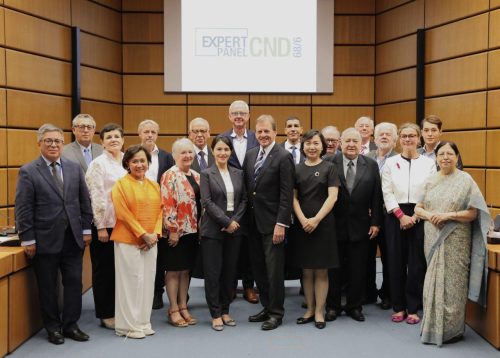
In March 2025, the UN Commission on Narcotic Drugs (CND) adopted resolution 68/6 to create a 'multidisciplinary panel of 19 independent experts' to review 'the existing machinery for the international control of narcotic drugs' and provide recommendations for reform in view of the global drug policy review to take place under the auspices of the CND in 2029. One year later, in March 2026, the panel's composition was confirmed.
Transform and colleagues around the world have advocating for such a review for many years. The panel’s review represents a historic opportunity to propose meaningful reforms that advance human rights, social inclusion, social justice, and the health and welfare of humankind. Read more about the panel - and civil society inputs into its discussions, on the IDPC resource page here.
As part of the panel's evidence gathering process, civil society organisations were invited to give oral evidence to the panel, and answer any questions, in two sessions - the first of which was last night. Transform were selected to be one of the speakers by the VNGOC; Our senior policy analyst Steve Rolles gave the following five minute statement (note: this may not be the exact wording used). We will share Transform's written submission when it is submitted in the next couple of weeks.
More and more jurisdictions are implementing, or actively exploring the legal regulation of cannabis markets for non-medical or recreational adult use. Increasingly this trend is including other drugs, including psychedelics in a number of US states, debates around MDMA regulation in the Netherlands, as well as regulation of more conspicuously risky drugs such as cocaine being actively debated in Colombia, Switzerland and elsewhere.
For the UN drug control institutions this is not an issue that can be marginalised or ignored any longer as somehow being the action of a rogue jurisdiction.
Such regulatory reforms are now being implemented or actively explored in multiple jurisdictions and member states, on every continent.
There are now more than half a billion people living in jurisdictions that have implemented or are implementing some form of legally regulated cannabis markets for non-medical adult use.
Certainly this raises important questions about what best practice regulation should look like, and how we can learn lessons from alcohol, tobacco and pharmaceutical regulation. It also raises important questions about international trade and sustainable development, as explored in a detailed recent report by the UN Development Programme
And of course, it raises a series of questions about the future of the UN drug control treaty framework.
The global consensus around prohibition, particularly of cannabis for non-medical use, is now decisively fractured. The trend towards formally regulated legal markets is accelerating - as more and more jurisdictions critically evaluate the failings of the past, and the growing evidence that responsible regulation can help deliver on the drug treaty aspirations to protect and enhance the ‘health and welfare’ of humankind.
It is this inescapable reality of accelerating change in approaches to cannabis regulation, that must be the basis of discussions in the CND and other high level multilateral forums moving forward. Not denial and stifling of dissent.
Certainly, the cannabis regulation debate remains challenging and contentious - often characterised by strongly held and polarised positions. But if the CND, the expert panel, and other relevant UN entities, cannot meaningfully engage with the reality of change already happening across the world, then they will forfeit their ability to influence and guide the reform process in ways that can support our shared aspirations of the UN charter, and of the Sustainable Development Goals.
As the UNODC has noted, the drug treaties are not ‘written in stone’. A range of mechanisms exists for treaties to evolve and modernise in response to changing circumstances, new evidence, and shifting political realities.
The need for such evolution of the treaties could hardly be clearer than on this issue - where many member states have already felt compelled to move, albeit reluctantly, into situations of technical noncompliance with specific treaty obligations.
The possible pathways for such a modernisation process have been detailed by numerous civil society voices and reports over many years (and we will detail these in our written submission), But to summarise: They include
Options for individual member states, including withdrawal from a treaty, or withdrawal and re-accession with a reservation (as happened in Bolivia regards coca leaf)
Options for a group of member states including inter se treaty modification
Options based on consensus within existing multilateral institutions including; treaty amendment, treaty modification, or replacement of the current treaties with a new and more flexible treaty framework that is fit for purpose in the modern era.
In what are uncharted waters in the history of international drugs control, it is not clear which path to modernisation we will ultimately adopt. But, if the CND does not engage with this vital discussion, and instead continues to entrench around inflexible and condemnatory positions that no longer meet the needs of a growing number of member states, the international drug control system risks drifting slowly into irrelevance as more and more member states unilaterally, or acting in concert, distance themselves from its rigid, outdated and malfunctioning rules.
On the important drug related issues of the day, citizens and member states look to the CND and UN institutions for normative guidance. This much needed leadership cannot be achieved through backward-looking entrenchment and finger wagging.
Today we have a untenable situation in which the UN Office for the High Commissioner for Human Rights agency is actively advocating for responsible regulation of all drugs, and 'transformative change' to facilitate it, even coming to the CND to make these arguments - whist the UN Office on Drugs and Crime remains dogmatically entrenched in the systemic failures of prohibition and the ‘war on drugs’. The lack of system wide coherence on this question undermines confidence in, and the credibility of the UN drug control system as a whole.
'Transformative change' requires an open minded and pragmatic dialogue between relevant stakeholders; member states, UN institutions, and civil society expertise - including the voices of people who use or produce cannabis and other drugs.
We would urge the expert panel to
1. Acknowledge the growing global trend towards regulation of cannabis and other drugs, and the critique that is driving it, the growing tensions within the multilateral system it creates, and threats to the viability of drug treaty system generally as member state defections from its core prohibitionist tenets increase
2. Detail the options within the multilateral system through which increased flexibility might be introduced, to better align the treaty system with the rapidly evolving needs of member states in the modern world - and make recommendations on their merits
3. Encourage the UN system to provide normative guidance to member states on good practice on responsible public health-led regulation - this should be in line with existing guidance on Alcohol regulation provided by the WHO, and tobacco regulation under the Frame Work Convention on Tobacco control